
Michael Yamamoto LLP Opens in the Bay Area
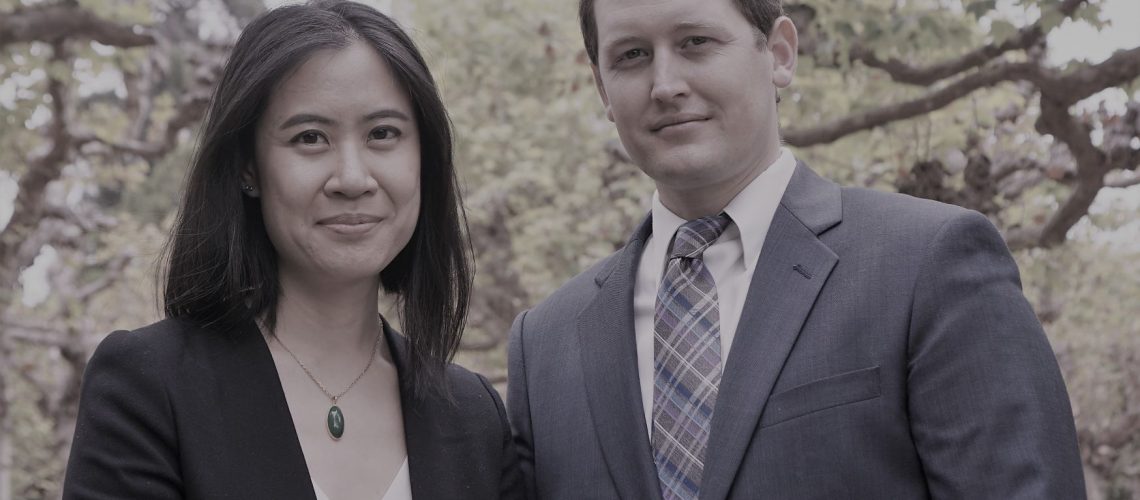
Michael Yamamoto LLP is a civil litigation boutique law firm based in Berkeley, California and operating throughout the State of California. Our attorneys work on a wide variety of civil cases, including cases involving civil and constitutional rights, business and partnership disputes, and the rights of employees and employers alike.
The firm’s founding partners met each other at law school—at the University of California, Hastings College of the Law—and formed a close friendship based on their mutual values of quality work, down-to-earth advocacy, and utilizing technology in the legal practice. These shared values form the bedrock of their law firm’s legal practice, and both founders are thrilled to usher in their new, modernized approach to age-old litigation practices.
Read below to hear from each founder and their vision for the firm.
Interview Question: Dorothy, why did you start your own firm?
Ms. Yamamoto: I didn’t really want to (laughter). Opening my own firm was one of those dreams you have when you’re frustrated with the system, and you think you know better, but its something you don’t really believe will happen. I never thought of myself as an entrepreneur like my dad or sister. My dad opened and ran his own restaurant in his early 30s, and later he operated his own pharmacy for about 25 years before he retired. One of my sisters also has that same spirit and started her own company in her late twenties. I always saw that entrepreneur spirit in them, but not me.
Then the pandemic struck, and as I’ve heard others say, it became the time to face head on what wasn’t working in my life. And my law practice was that for me.
I’ve worked for many law firms in the past—both large and small—and with numerous other attorneys as co-counsel or opposing counsel, and each time I’ve felt constrained in how much attention I could devote to a client, there was little collaboration on cases (which, in my opinion, always elevates the quality of the work), and I had no control over who I helped. Faced with that, I came across a fork in the road: either I needed to search for a better fit or create something tailored to my values with other similarly minded and talented individuals. Obviously—I choose the latter. And so far, it’s proven to be the right decision for me.
Interview Question: What does your firm do better than others?
Ms. Yamamoto: What truly makes one firm “better” than another is fit—whether that particular attorney is the right fit for that particular client, her goals, her “style,” etc.
Shopping for an attorney is much like shopping for a doctor: either you want a solid general practitioner for a quick check up to confirm everything is okay; or you’re facing what feels like a life-threatening situation, and you want the absolute best.
In the legal industry, I am confident many attorneys can handle the more routine situations competently, and they are good enough to get the job done. But when it comes to more serious situations—such as initiating a lawsuit or when you’re in the middle of one—competency and legal acumen are absolute necessities. Not all firms have that; ours does.
I will also say that with our firm, you will have the opportunity to interview and work closely with the handling attorney on your matter. The handling attorney will always have the majority stake in your case; be principally responsible for all intimate details of your case; and spearhead all decisions and work product on your case. Your matter won’t be passed around among a pool of attorneys, with each person covering only a small slice of the pie without gaining an understanding of the “big picture.” Here, the one or two attorneys on your case will become familiar with both the nitty-gritty details and your high-level goals, so we can give you the best possible advice. This is a principle that my law partner Greg and I value highly, and it is a fundamental aspect of our firm’s mission.
Interview Question: Greg, I understand you lead the civil rights division at the firm, which handles a gamut of issues including disputes over free speech, freedom of religion, and due process. How did you come to work in that area of the law? I understand it’s an uncommon practice area.
Mr. Michael: It was really a mixture of luck and determination.
Freedom and equality under the law isn’t just some nebulous concept, it’s personal to me, and, frankly, should be to you too, and everyone we care about. Most of us in California have personally experienced the bitter loss of a basic freedom. In recent years, for example, I’ve seen people vote away their neighbor’s right to marry; I’ve seen police repeatedly abuse their authority; and in recent months we’ve all seen a governor criminalize protesting and going to church—something I never thought I’d hear myself say. When our basic liberties are ignored all of us are effected.
Unfortunately, there aren’t actually that many people fighting for these freedoms out there. I’ve lived in the Bay Area for nearly two decades, and while I can confidently tell you that you’d have no difficulty finding a lawyer here to challenge one of President Trump’s many unconstitutional policies, I can’t say the same when it comes to policies adopted by Democrats or progressives. The opposite seems to be true in other parts of the state. For reasons I’ve never quite understood, people seem to stay quiet when the shoe is on the other foot.
In my first few years of practice in San Francisco, I was fortunate enough to be able to help fill that gap. During that time, I worked on several high-profile civil rights cases, including to defend the free speech rights of Berkeley College Republicans at UC Berkeley—my alma mater—who wanted to host Ann Coulter and other conservative speakers on campus. I also fought to protect the due process rights of hundreds of people ushered by police into an anti-Trump mob as they left a Trump rally in San Jose.
These types of cases proved to be complex, but also very rewarding. In the San Jose case, for example, we were able to set binding legal precedent in the Ninth Circuit Court of Appeals making it possible for people to sue police for certain types of misconduct. That case continues to be cited by courts across the country and to shape new law and law enforcement practices.
Unfortunately, I don’t think the need for civil rights attorneys is going away anytime soon. Elections don’t seem to help as much as I’d like to think they do; more often than not, the only thing that changes is the government’s target. Our civil rights practice aims to help where and when we can, regardless of who’s in charge.
Interview Question: I assume that those types of civil rights cases aren’t very lucrative. How do you juggle that interest with the firm’s other goals?
Mr. Michael: Thus far, we’ve juggled those goals by utilizing new technology to increase attorney and staff efficiency. Both my partner and I believe that in this day and age, an effective attorney must embrace new technology and the challenges that those tools bring. That is another part of this firm’s mission statement: to always be forward thinking and ready for the needs of today and tomorrow.
Interview Question: Well, thank you both for you time today. From what you’ve both described, I’m glad you’re opening up shop.
Mr. Michael: Thank you, and thanks for your time as well.
Ms. Yamamoto: Yes, thank you.